Friday, October 14, 2022

Vintage 1960 Movies Spartacus


Spartacus

A universal-International film by Stanley Kubrick. At the time of its first release in 1960, “Spartacus” was hailed as the first intellectual epic since the silent days and the first Roman or Biblical saga to deal with ideas as well as spectacle. The notion of being forced to fight for entertainment leads Spartacus to head a slave revolt that eventually spreads over half of Italy.

          The film won four Academy Awards with Best Supporting Actor for Peter Ustinov, Best Cinematography, Best Art Direction, and Best Costume Design. It became the biggest moneymaker in Universal Studios history until it was surpassed by Airport  (1970).

          In 2017, it was selected for preservation in the United States National Film Registry by the Library of Congress as being "culturally, historically, or aesthetically significant."

Added Note

The development of Spartacus was partly instigated by Kirk Douglas's failure to win the title role in William Wyler's Ben-Hur. Douglas had worked with Wyler before in Detective Story and was disappointed when Wyler chose Charlton Heston. Instead, Douglas read Howard Fast's novel, Spartacus, and was impressed enough to purchase an option on the book with his own finances. Universal Studios eventually agreed to finance the film after Douglas persuaded Laurence Olivier, Charles Laughton, and Peter Ustinov to act in it.

Friday, September 16, 2022


Any kind of get-together at my aunt's house included this sandwich. Sometimes she had this filling between long Italian bread or several Kaiser rolls.  Either way, this was delicious and easy to transport.


Egg, Deviled Ham, and Cheese Sandwiches


1 large French bread or hard rolls, slice lengthwise

6 hard-cooked eggs, shelled and mashed

1 cup grated sharp cheddar cheese

2 tsp instant minced onion

2 Tbsp Catsup

1/2 tsp powdered mustard

1/2 tsp Worcestershire

Dash of hot pepper sauce (opt)

1/4 cup mayonnaise

2 small cans or 1 large can of deviled ham


Mix thoroughly, and add spread between butter bread or roll.


Thursday, July 14, 2022

Vintage 1960s Book


IN COLD BLOOD by Truman Capote     published in 1966

Random House    Genre: Non-fiction

When bodies are discovered in a family home, initially, the police are baffled. The FBI agent in charge of the investigation thinks that the killer must be someone close to the family. Rumor sets the small town of Holcomb on fire, and Hartman's Cafe is the center of numerous theories.


Sunday, June 19, 2022

Vintage 1960s Television The Beverly Hillbillies


The Beverly Hillbillies


The Beverly Hillbillies was an American situation comedy. broadcast on CBS from 1962 to 1971. The show cast  Ebsen, Irene Ryan, Donna Douglas, and Max Baer, Jr. as the Clampetts. The show was created by writer Paul Henning. It was followed by two other Henning-inspired "country cousin" series on CBS: Petticoat Junction and its spin-off Green Acres, which reversed the rags-to-riches, country-to-city model of The Beverly Hillbillies.

          The "Fish Out of Water" series starts as Jed Clampett, an impoverished and widowed mountaineer, is living alongside an oil-rich swamp with his daughter and mother-in-law. The Clampetts bring a moral, unsophisticated, and minimalistic lifestyle to the swanky, self-obsessed, and superficial Beverly Hills community.  Plots often involve the outlandish efforts Drysdale makes to keep the Clampetts' money in his bank and his wife's efforts to rid the neighborhood of the hillbillies. The family's periodic attempts to return to the mountains are often prompted by Granny's perceiving a slight or insult from one of the "city folk".

          The Beverly Hillbillies ranked among the top 20 most-watched programs on television for eight of its nine seasons, twice ranking as the number one series of the year, with 16 episodes that remain among the 100 most-watched television episodes in history. It won seven Emmy nominations during its run. The series remains in syndicated reruns, and its ongoing popularity spawned a 1993 film remake by 20th Century Fox.


Added note:

          The show received poor reviews from some contemporary critics. Despite the poor reviews, the show shot to the top of the Nielsen ratings shortly after its premiere and stayed there for several seasons. During its first two seasons, it was the number one program in the U.S. During its second season, it earned some of the highest ratings ever recorded for a half-hour sitcom. The series had excellent ratings throughout its run, although it had fallen out of the top 20 most-watched shows during its final season.

Wednesday, May 11, 2022

Vintage 1960s Scandals The Teacup Poisoner


The Teacup Poisoner


Graham Frederick Young was born September 7, 1947,  better known as "The Teacup Poisoner" and later the "St. Albans Poisoner".

          His mother died a few months after his birth. His father sent him to live with an uncle and aunt. A few years later he was separated from his aunt and uncle in order to live with his father and new stepmother.

          In 1961, he started to test poisons on his family, and school friends. enough to make them violently ill with severe pain symptoms.

          On Easter Saturday, April 21, 1962, Young's stepmother, Molly, died from poisoning and shortly afterward his father became seriously ill and was taken to hospital where he was told that he was suffering from antimony poisoning and one more dose would have killed him. Young's aunt, who knew of Graham's fascination with chemistry and poisons, became suspicious. Young was arrested on May 23, 1962, and confessed to the attempted murders of his father, sister, and friends. The remains of his stepmother could not be analyzed because she had been cremated which was suggested by Graham.

          Young was detained under the Mental Health Act in Broadmoor Hospital, an institution for patients with mental disorders. He was diagnosed with personality disorder, schizophrenia, and signs of the autism spectrum.

          In June 1970, after nearly eight years in Broadmoor,  the prison psychiatrist decided Young, "is no longer obsessed with poisons, violence, and mischief". He was deemed, "fully recovered" and was released. (In the hospital Young had studied medical texts, improving his knowledge of poisons, and continued experiments using inmates and staff .)

          After his release, he began work at John Hadland Laboratories. The company manufactured thallium bromide-iodide infrared lenses, which were used in military equipment. No thallium was stored on-site, but Young obtained his supplies of poison from a London chemist. His employers were not informed of his past as a convicted prisoner.

          Soon after he began work, his foreman grew ill and died. Young had been making tea laced with poisons for his colleagues.  He poisoned about 7 people during the next few months.

          At this point, it was evident that an investigation was necessary. Young told a colleague that his hobby was the study of toxic chemicals. The colleague went to the police, who uncovered Young's criminal record.

          Young was arrested, on November 21,1971. Police found several poisons, as well as a detailed diary that he had kept, noting the doses he had administered, their effects, and whether he was going to allow each person to live or die.

          At his trial, he pleaded not guilty and claimed the diary was research for a fantasy novel. He was convicted again and sentenced to life in prison. He was dubbed "The Teacup Poisoner".

          Young died in prison on August 1,1990, one month before his 43rd birthday. The cause of death was listed as myocardial infarction (heart attack).  


Added note:

In November 2005, a 16-year-old Japanese schoolgirl was arrested for poisoning her mother with thallium. She claimed to be fascinated by Young and kept an online blog, similar to Young’s diary, recording dosage, and reactions.

Saturday, April 16, 2022

Vintage 1960s Music The Twist


The Twist


"The Twist" is an American pop song written and originally released in early 1959 (having been recorded on November 11, 1958) by Hank Ballard and the Midnighters as a B-side to "Teardrops on Your  Letter".  Ballard's version was a moderate 1960 hit, peaking at number 28 on the Billboard Hot 100.

          The song became popular on a Baltimore television dance show hosted by local DJ Buddy Dean. Dean recommended the song to Dick Clark, host of the national American Bandstand. Clark attempted to book Ballard to perform on the show but Ballard was unavailable.  Clark searched for a local artist to record the song...enter Chubby Checker. Exposure for the song on American Bandstand and on The Dick Clark Saturday Night Show helped propel the song to the top of the American charts.  Checker's1960 cover version of the song began the Twist dance craze.

          In late 1961 and early 1962, the twist craze caught on in high society. Celebrities doing the dance made the song a hit with adults. Soon there were long lines at the Peppermint Lounge nightclub in New York. This new interest made "The Twist" the only recording to hit number one on the United States charts during two separate chart runs, and marked a major turning point for adult acceptance of rock and roll music.


Have fun with this memorable old video

 https://www.youtube.com/watch?v=pHGXwQeUk7M

Sunday, March 20, 2022

Vintage 1960s Movies Cool Hand Luke


Cool Hand Luke is a 1967 American prison drama film directed by Stuart Rosenberg, starring Paul Newman and featuring George Kennedy in an Oscar-winning performance. Newman stars in the title role as Luke, a prisoner in a Florida prison camp who refuses to submit to the system. Set in the early 1950s, it is based on Donn Pearce's 1965 book, COOL HAND LUKE.

          Cool Hand Luke received favorable reviews and was a box-office success upon its release. It cemented Newman's status as one of the era's top actors, and was called the "touchstone of an era". Newman was nominated for the Academy Award for Best Actor, Kennedy won the Academy Award for Best  Supporting Actor. In 2005, the United States Library of Congress selected the film for preservation in the National Film Registry, considering it "culturally, historically, or aesthetically significant".


An added note:

Paul Newman's character, Luke, is a decorated war veteran who is sentenced to serve two years in a Florida rural prison. He constantly defies the prison authorities, becoming a leader among the prisoners, as well as escaping multiple times.  While the script was being developed, the leading role was initially considered for Jack Lemmon or Telly Savalas. Newman asked to play the leading role after hearing about the project. To develop his character, he traveled to West Virginia where he recorded local accents and surveyed people's behavior.

Thursday, February 10, 2022

Vintage 1960s Flaming Cherries Jubilee


Flaming Cherries Jubilee


This is a particularly dramatic dessert popular in the early 60s for company or a special celebration. The best way to of lighting the alcohol is to heat it before setting it on fire.


Caution: Do not carry the flaming dish, light it at the table...it is safer.


2 (15-ounce) cans of whole Bing cherries in juice, drained and juice reserved

1 tablespoon sugar

1 tablespoon cornstarch

1/4 cup kirsch or cognac, warmed

2 pints vanilla ice cream

In a small dish, combine a little cherry juice with sugar and cornstarch. In a skillet, heat juice from cherries over moderate heat. Add cornstarch mixture. When juice thickens, add cherries to warm through. Pour in warmed liqueur, then flame the pan to burn off the alcohol. Remove cherries from heat. Scoop vanilla ice cream into large cocktail glasses or dessert dishes and spoon cherries down over ice cream. Serves 6

                                                                             Food Network


Friday, January 14, 2022

Vintage 1960 Books


Vintage 1960

Books


THE FEMININE MYSTIQUE by Betty Friedan     published in 1963

W.W. Norton       Genre: Non-fiction


     THE FEMININE MYSTIQUE written by Betty Friedan is one of the literary works that sparked the beginning of second-wave feminism in the United States. Friedan was inspired to write her experiences after interviewing classmates from Smith College at their 15th-anniversary reunion. This experience prompted her research into the phenomenon that was plaguing these suburban housewives.

Friday, December 24, 2021

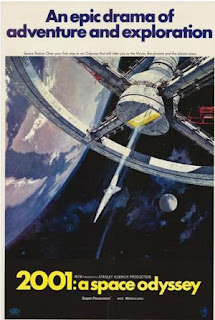
Vintage 1950s Movies 2001: A Space Odyssey


2001: A Space Odyssey


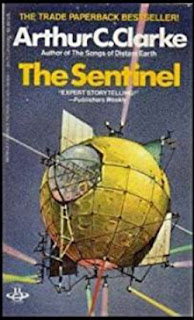
2001: A Space Odyssey is a 1968 epic science fiction film inspired by the book of short stories "The Sentinel"  by Arthur C. Clarke and his other short stories. The film follows a voyage to Jupiter with the sentient computer 

 HAL after the discovery of a slab-sided alien monolith affecting human evolution, and features themes existentialism, human evolution, technology, artificial intelligence, and the possibility of extraterrestrial life.


          The film is noted for its scientifically accurate depiction of space flight, pioneering special effects, and ambiguous imagery.  

          The film received diverse critical responses ranging from those who saw it as darkly apocalyptic in tone to those who saw it as an optimistic reappraisal of the hopes of humanity. The film garnered a cult following and became the highest-grossing North American film of 1968. It was nominated for four Academy Awards. Director Stanley Kubrick won the award for his direction of the visual effect.

          In 1991, it was deemed "culturally, historically, or aesthetically significant" by the United States Library of Congress and selected for preservation in the National Film Registry. In 2010, it was named the greatest film of all time by The Moving Arts Film Journal.


        Filming began December 29, 1965, in Stage H at Shepperton Studios, England. In January 1966, the production moved to the smaller MGM-British Studios in Borehamwood, where the live-action and special-effects filming was done, starting with the scenes involving Floyd on the Orion spaceplane; it was described as a "huge throbbing nerve center ... in which the same frenetic atmosphere as a Cape Kennedy blockhouse during the final stages of Countdown." 

          For the opening sequence involving tribes of apes, professional mine

  Daniel Richter played the lead ape and choreographed the movements of the other man-apes, who were mostly portrayed by his mime troupe.


Added note

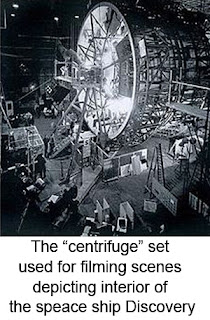
          The shots where the actors appear on opposite sides of the wheel required one of the actors to be strapped securely into place at the "top" of the wheel as it moved to allow the other actor to walk at the "bottom" of the wheel to join him. The most notable case is when Bowman enters the centrifuge from the central hub on a ladder, and joins Poole, who is eating on the other side of the centrifuge. This required Gary Lockwood to be strapped into a seat while Keir Dullea walked toward him from the opposite side of the wheel as it turned with him.


Saturday, December 18, 2021

Vintage 1960s Food Easy Swedish Panckes


Easy Swedish Pancakes

Christmas morning my mother made these pancakes for the family after we opened our presents. Just the thought of these pancakes brings back so many memories

Serve with butter, jam, fresh berries( i.e. Lingonberrys), or maple syrup.

Ingredients

4 eggs

2 cups milk

1/2 cup all-purpose flour

1 tablespoon sugar

1 pinch salt

2 tablespoons melted butter


In a large bowl, beat eggs with a wire whisk. Mix in milk, flour, sugar, salt, and melted butter.

Preheat a non-stick electric skillet to medium heat. Pour a thin layer of batter on the skillet, and spread to the edges. Cook until the top surface appears dry. Cut into 2 or 4 sections, and flip with a spatula. Cook for another 2 minutes, or until golden brown. Roll each pancake up, and serve.

                                                                   allrecipes.com

Saturday, December 11, 2021

Vintage 1960s Women's Fashions Pants

Women's Fashions

Pants

Many of the 1960s fashions are still worn today. In the first few years of the 1960s. fashions were conservative (women still primarily wore dresses. Casual clothes were reserved for casual occasions). 1964, however, brought a music and fashion revolution from England and suddenly fashion made history.

Most notably:

-hip-Hugger flared pants made out of velvet.


-capri-length pants (also called pedal pushers: were made popular by TV and movie personalities.

-culottes started conservatively at mid-shin length but by the end of the '60s, they changed into gauchos and the palazzo pants in the '70s.


- shorts became an everyday fashion choice that designers chose in order to cash in on the trend by making dressier short outfits.

-blue jeans gained popularity in the 60s specifically with young people. Most adult women probably only wore jeans at outdoor events. But under 20 wore them all the time (except at school!)

          Another popular style in the 1960s was referred to as skorts or scooters, or skate skirts. These were short skirts (above the knee) with clever matching shorts hidden under the front flap of the skirt. This style of skort was perfect for occasions where a skirt was more appropriate but you didn't want to deal with all the inconvenience of a short skirt.

            The fashion of the 1960s featured a number of diverse trends. It was a decade that broke many fashion traditions, mirroring social movements during the time.

Saturday, December 4, 2021

Vintage 1960s Television Courtship of Eddie's Father


Courtship of Eddie's Father


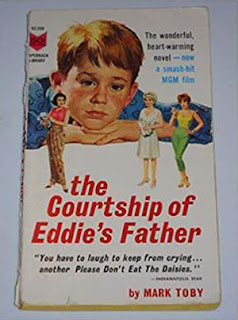
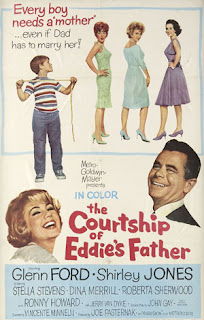
The Courtship of Eddie's Father is an American sitcom based on the 1963 movie of the same name which, in turn, was based on a novel by Mark Toby.


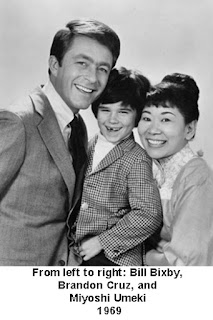
          The series is about a widower, Tom Corbett (Bill Bixby), who is a magazine publisher, and his young son, Eddie (Brandon Cruz). Eddie believes his father should re-marry. Eddie's continued matchmaking efforts were the theme of the show.

          The series aired from September 17, 1969, through March 1, 1972.

Bixby received an Emmy nomination for the show in 1971.


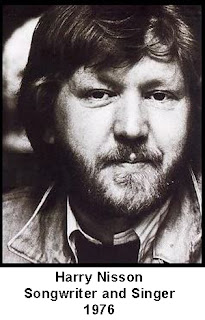
         The television show's theme song, "Best Friend", was written and performed by Harry Nilsson. The song has often been used as an indication of father-son bonding in television and film.


Like to hear the iconic theme music of this show?  Click below

https://www.youtube.com/watch?v=QGu0m08Etm8

Saturday, November 27, 2021

Vintage 1960s Music I Want to Hold Your Hand

I Want to Hold Your Hand

I Want to Hold Your Hand is a song written by John Lennon and Paul McCartney, of The Beatles and recorded on October 17, 1963. It was the first Beatles record to be made using four-track equipment.

          With advance orders exceeding one million copies in the United Kingdom, I Want to Hold Your Hand would have gone straight to the top of the British record charts on its day of release (November 29, 1963) had it not been topped by the group's first million-seller She Loves You, their previous UK single. They waited two weeks to release, I Want to Hold Your Hand which stayed at # 1 for five weeks and remained in the UK top 50 for 21 weeks. The song was re-released on December 6, 1982, in the UK.

          It was the group's first American #1 hit, entering the Billboard Hot 100 chart on  January 18, 1964, at number 45 and starting the British Invasion of the American music industry. By February, it topped the Hot 100 and stayed there for seven weeks before being replaced by She Loves You. It remained on the Billboard chart for 15 weeks. I Want to Hold Your Hand became the Beatles' best-selling single worldwide selling more than 12 million copies. 

             The Beatles came to America for the first time on February 7,1964, greeted at the airport by screaming fans. I Want to Hold Hand was the #! song in the country at the time, and it stayed on top for seven weeks. Their next single released in the US was She Loves You, replacing it at the top.


An Added note

Paul McCartney and John Lennon wrote I Want To Hold Your Hand at the request of their manager, Brian Epstein. He wanted them to write something for the American market which they had yet to break into.


Enjoy your walk down memory lane with this live performance on The Ed Sullivan Show on 2/9/64.

https://www.youtube.com/watch?v=jenWdylTtzs

Saturday, November 13, 2021

 Easy Turkey Recipe


1 Turkey (10-12 pound), giblets and liver reserved

Apple, carrot, onion chopped, and fresh herbs

Butter, salt, and pepper

Start by preheating the oven to 325 degrees F. Use some paper towels to dry the turkey after scooping out the cavity. Take salt and pepper and season both inside and outside of the turkey. Fill the cavity with chopped vegetables and herbs.

Take a roasting pan and put the turkey with the breast side facing upwards. Use melted butter and brush evenly over the turkey. Cover it with foil and roast for around 2 hours. Take it out and put some more melted butter over your turkey after opening the foil.

Raise the temperature of the oven to 425 degrees F and roast for one more hour. Use an instant-read thermometer in the thickest part of the meat and check for 165 degrees F.

Allow resting with foil intact for 30-45 minutes before carving.

Saturday, November 6, 2021

Vintage 1960s Food Peas Juliette


Peas Juliette 

I loved this as a kid, begged my mother for it every week. I modernized it, making it healthier by using frozen peas instead of canned, using brown rice instead of white, and omitting the cornstarch. It tastes better than the picture looks! Here is the original recipe.


1 1-lb. can Del Monte Brand Early Garden Peas
1/3 cup chopped onion
3 tbsp. butter or margarine
1 tbsp. cornstarch
1/4 cup chopped pimiento
3 cups hot cooked white rice
1 6 1/2-oz. can chunk style tuna (in water), drained and flaked
1/3 cup shredded Parmesan cheese
salt and pepper


Drain peas, reserving liquid. Sauté onion in butter or margarine till tender. Add cornstarch dissolved in liquid from peas. Cook, stirring constantly, till thickened. Add peas and pimiento; heat. Combine hot rice, tuna, and cheese. Season to taste. Pack into 1-qt. ring or other simple molds; turn out on a hot serving dish. Serve with hot peas mixture, as shown.