Friday, December 24, 2021

Vintage 1950s Movies 2001: A Space Odyssey


2001: A Space Odyssey


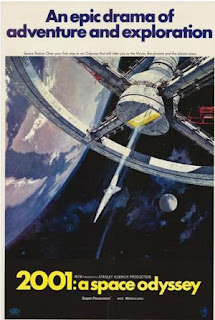
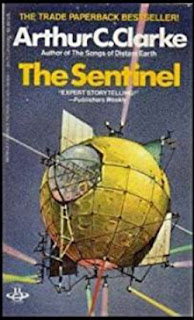
2001: A Space Odyssey is a 1968 epic science fiction film inspired by the book of short stories "The Sentinel"  by Arthur C. Clarke and his other short stories. The film follows a voyage to Jupiter with the sentient computer 

 HAL after the discovery of a slab-sided alien monolith affecting human evolution, and features themes existentialism, human evolution, technology, artificial intelligence, and the possibility of extraterrestrial life.

          The film is noted for its scientifically accurate depiction of space flight, pioneering special effects, and ambiguous imagery.  

          The film received diverse critical responses ranging from those who saw it as darkly apocalyptic in tone to those who saw it as an optimistic reappraisal of the hopes of humanity. The film garnered a cult following and became the highest-grossing North American film of 1968. It was nominated for four Academy Awards. Director Stanley Kubrick won the award for his direction of the visual effect.

          In 1991, it was deemed "culturally, historically, or aesthetically significant" by the United States Library of Congress and selected for preservation in the National Film Registry. In 2010, it was named the greatest film of all time by The Moving Arts Film Journal.

        Filming began December 29, 1965, in Stage H at Shepperton Studios, England. In January 1966, the production moved to the smaller MGM-British Studios in Borehamwood, where the live-action and special-effects filming was done, starting with the scenes involving Floyd on the Orion spaceplane; it was described as a "huge throbbing nerve center ... in which the same frenetic atmosphere as a Cape Kennedy blockhouse during the final stages of Countdown." 

          For the opening sequence involving tribes of apes, professional mine

  Daniel Richter played the lead ape and choreographed the movements of the other man-apes, who were mostly portrayed by his mime troupe.


Added note

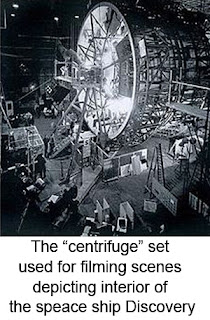
          The shots where the actors appear on opposite sides of the wheel required one of the actors to be strapped securely into place at the "top" of the wheel as it moved to allow the other actor to walk at the "bottom" of the wheel to join him. The most notable case is when Bowman enters the centrifuge from the central hub on a ladder, and joins Poole, who is eating on the other side of the centrifuge. This required Gary Lockwood to be strapped into a seat while Keir Dullea walked toward him from the opposite side of the wheel as it turned with him.


Saturday, December 18, 2021

Vintage 1960s Food Easy Swedish Panckes


Easy Swedish Pancakes

Christmas morning my mother made these pancakes for the family after we opened our presents. Just the thought of these pancakes brings back so many memories

Serve with butter, jam, fresh berries( i.e. Lingonberrys), or maple syrup.

Ingredients

4 eggs

2 cups milk

1/2 cup all-purpose flour

1 tablespoon sugar

1 pinch salt

2 tablespoons melted butter


In a large bowl, beat eggs with a wire whisk. Mix in milk, flour, sugar, salt, and melted butter.

Preheat a non-stick electric skillet to medium heat. Pour a thin layer of batter on the skillet, and spread to the edges. Cook until the top surface appears dry. Cut into 2 or 4 sections, and flip with a spatula. Cook for another 2 minutes, or until golden brown. Roll each pancake up, and serve.

                                                                   allrecipes.com

Saturday, December 11, 2021

Vintage 1960s Women's Fashions Pants

Women's Fashions

Pants

Many of the 1960s fashions are still worn today. In the first few years of the 1960s. fashions were conservative (women still primarily wore dresses. Casual clothes were reserved for casual occasions). 1964, however, brought a music and fashion revolution from England and suddenly fashion made history.

Most notably:

-hip-Hugger flared pants made out of velvet.


-capri-length pants (also called pedal pushers: were made popular by TV and movie personalities.

-culottes started conservatively at mid-shin length but by the end of the '60s, they changed into gauchos and the palazzo pants in the '70s.


- shorts became an everyday fashion choice that designers chose in order to cash in on the trend by making dressier short outfits.

-blue jeans gained popularity in the 60s specifically with young people. Most adult women probably only wore jeans at outdoor events. But under 20 wore them all the time (except at school!)

          Another popular style in the 1960s was referred to as skorts or scooters, or skate skirts. These were short skirts (above the knee) with clever matching shorts hidden under the front flap of the skirt. This style of skort was perfect for occasions where a skirt was more appropriate but you didn't want to deal with all the inconvenience of a short skirt.

            The fashion of the 1960s featured a number of diverse trends. It was a decade that broke many fashion traditions, mirroring social movements during the time.

Saturday, December 4, 2021

Vintage 1960s Television Courtship of Eddie's Father


Courtship of Eddie's Father


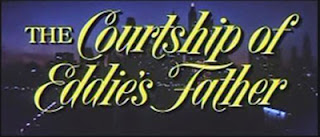
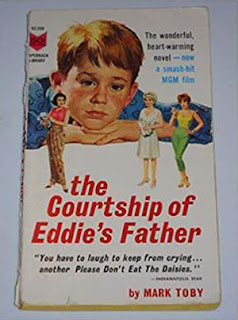
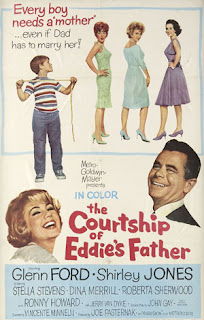
The Courtship of Eddie's Father is an American sitcom based on the 1963 movie of the same name which, in turn, was based on a novel by Mark Toby.


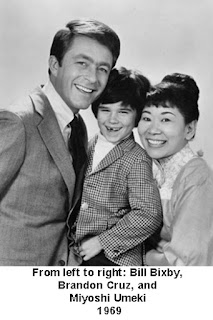
          The series is about a widower, Tom Corbett (Bill Bixby), who is a magazine publisher, and his young son, Eddie (Brandon Cruz). Eddie believes his father should re-marry. Eddie's continued matchmaking efforts were the theme of the show.

          The series aired from September 17, 1969, through March 1, 1972.

Bixby received an Emmy nomination for the show in 1971.


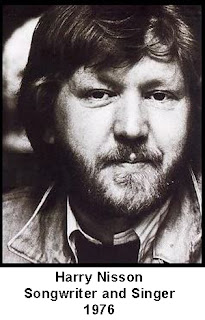
         The television show's theme song, "Best Friend", was written and performed by Harry Nilsson. The song has often been used as an indication of father-son bonding in television and film.


Like to hear the iconic theme music of this show?  Click below

https://www.youtube.com/watch?v=QGu0m08Etm8

Saturday, November 27, 2021

Vintage 1960s Music I Want to Hold Your Hand

I Want to Hold Your Hand

I Want to Hold Your Hand is a song written by John Lennon and Paul McCartney, of The Beatles and recorded on October 17, 1963. It was the first Beatles record to be made using four-track equipment.

          With advance orders exceeding one million copies in the United Kingdom, I Want to Hold Your Hand would have gone straight to the top of the British record charts on its day of release (November 29, 1963) had it not been topped by the group's first million-seller She Loves You, their previous UK single. They waited two weeks to release, I Want to Hold Your Hand which stayed at # 1 for five weeks and remained in the UK top 50 for 21 weeks. The song was re-released on December 6, 1982, in the UK.

          It was the group's first American #1 hit, entering the Billboard Hot 100 chart on  January 18, 1964, at number 45 and starting the British Invasion of the American music industry. By February, it topped the Hot 100 and stayed there for seven weeks before being replaced by She Loves You. It remained on the Billboard chart for 15 weeks. I Want to Hold Your Hand became the Beatles' best-selling single worldwide selling more than 12 million copies. 

             The Beatles came to America for the first time on February 7,1964, greeted at the airport by screaming fans. I Want to Hold Hand was the #! song in the country at the time, and it stayed on top for seven weeks. Their next single released in the US was She Loves You, replacing it at the top.


An Added note

Paul McCartney and John Lennon wrote I Want To Hold Your Hand at the request of their manager, Brian Epstein. He wanted them to write something for the American market which they had yet to break into.


Enjoy your walk down memory lane with this live performance on The Ed Sullivan Show on 2/9/64.

https://www.youtube.com/watch?v=jenWdylTtzs

Saturday, November 13, 2021

 Easy Turkey Recipe


1 Turkey (10-12 pound), giblets and liver reserved

Apple, carrot, onion chopped, and fresh herbs

Butter, salt, and pepper

Start by preheating the oven to 325 degrees F. Use some paper towels to dry the turkey after scooping out the cavity. Take salt and pepper and season both inside and outside of the turkey. Fill the cavity with chopped vegetables and herbs.

Take a roasting pan and put the turkey with the breast side facing upwards. Use melted butter and brush evenly over the turkey. Cover it with foil and roast for around 2 hours. Take it out and put some more melted butter over your turkey after opening the foil.

Raise the temperature of the oven to 425 degrees F and roast for one more hour. Use an instant-read thermometer in the thickest part of the meat and check for 165 degrees F.

Allow resting with foil intact for 30-45 minutes before carving.

Saturday, November 6, 2021

Vintage 1960s Food Peas Juliette


Peas Juliette 

I loved this as a kid, begged my mother for it every week. I modernized it, making it healthier by using frozen peas instead of canned, using brown rice instead of white, and omitting the cornstarch. It tastes better than the picture looks! Here is the original recipe.


1 1-lb. can Del Monte Brand Early Garden Peas
1/3 cup chopped onion
3 tbsp. butter or margarine
1 tbsp. cornstarch
1/4 cup chopped pimiento
3 cups hot cooked white rice
1 6 1/2-oz. can chunk style tuna (in water), drained and flaked
1/3 cup shredded Parmesan cheese
salt and pepper


Drain peas, reserving liquid. Sauté onion in butter or margarine till tender. Add cornstarch dissolved in liquid from peas. Cook, stirring constantly, till thickened. Add peas and pimiento; heat. Combine hot rice, tuna, and cheese. Season to taste. Pack into 1-qt. ring or other simple molds; turn out on a hot serving dish. Serve with hot peas mixture, as shown.