Saturday, November 27, 2021

Vintage 1960s Music I Want to Hold Your Hand

I Want to Hold Your Hand

I Want to Hold Your Hand is a song written by John Lennon and Paul McCartney, of The Beatles and recorded on October 17, 1963. It was the first Beatles record to be made using four-track equipment.

          With advance orders exceeding one million copies in the United Kingdom, I Want to Hold Your Hand would have gone straight to the top of the British record charts on its day of release (November 29, 1963) had it not been topped by the group's first million-seller She Loves You, their previous UK single. They waited two weeks to release, I Want to Hold Your Hand which stayed at # 1 for five weeks and remained in the UK top 50 for 21 weeks. The song was re-released on December 6, 1982, in the UK.

          It was the group's first American #1 hit, entering the Billboard Hot 100 chart on  January 18, 1964, at number 45 and starting the British Invasion of the American music industry. By February, it topped the Hot 100 and stayed there for seven weeks before being replaced by She Loves You. It remained on the Billboard chart for 15 weeks. I Want to Hold Your Hand became the Beatles' best-selling single worldwide selling more than 12 million copies. 

             The Beatles came to America for the first time on February 7,1964, greeted at the airport by screaming fans. I Want to Hold Hand was the #! song in the country at the time, and it stayed on top for seven weeks. Their next single released in the US was She Loves You, replacing it at the top.


An Added note

Paul McCartney and John Lennon wrote I Want To Hold Your Hand at the request of their manager, Brian Epstein. He wanted them to write something for the American market which they had yet to break into.


Enjoy your walk down memory lane with this live performance on The Ed Sullivan Show on 2/9/64.

https://www.youtube.com/watch?v=jenWdylTtzs

Saturday, November 13, 2021

 Easy Turkey Recipe


1 Turkey (10-12 pound), giblets and liver reserved

Apple, carrot, onion chopped, and fresh herbs

Butter, salt, and pepper

Start by preheating the oven to 325 degrees F. Use some paper towels to dry the turkey after scooping out the cavity. Take salt and pepper and season both inside and outside of the turkey. Fill the cavity with chopped vegetables and herbs.

Take a roasting pan and put the turkey with the breast side facing upwards. Use melted butter and brush evenly over the turkey. Cover it with foil and roast for around 2 hours. Take it out and put some more melted butter over your turkey after opening the foil.

Raise the temperature of the oven to 425 degrees F and roast for one more hour. Use an instant-read thermometer in the thickest part of the meat and check for 165 degrees F.

Allow resting with foil intact for 30-45 minutes before carving.

Saturday, November 6, 2021

Vintage 1960s Food Peas Juliette


Peas Juliette 

I loved this as a kid, begged my mother for it every week. I modernized it, making it healthier by using frozen peas instead of canned, using brown rice instead of white, and omitting the cornstarch. It tastes better than the picture looks! Here is the original recipe.


1 1-lb. can Del Monte Brand Early Garden Peas
1/3 cup chopped onion
3 tbsp. butter or margarine
1 tbsp. cornstarch
1/4 cup chopped pimiento
3 cups hot cooked white rice
1 6 1/2-oz. can chunk style tuna (in water), drained and flaked
1/3 cup shredded Parmesan cheese
salt and pepper


Drain peas, reserving liquid. Sauté onion in butter or margarine till tender. Add cornstarch dissolved in liquid from peas. Cook, stirring constantly, till thickened. Add peas and pimiento; heat. Combine hot rice, tuna, and cheese. Season to taste. Pack into 1-qt. ring or other simple molds; turn out on a hot serving dish. Serve with hot peas mixture, as shown.

Saturday, October 30, 2021

intage 1960s Women's Fashio


 Kitten Heel Pumps

The 1960s dropped the heel to simple slip-ons, strappy sandals, and ankle boots in vibrant mod colors.

      Tall, thin heels were popular in the 1950s. They shaped a women's legs and helped women put some wiggle in their walk while wearing a tight pencil dress. The pencil dress continued into the 1960s but with a straighter shift shape. High heel shoes were replaced by short kitten heels or Sabrina heels, which were much easier to walk in but still offered some leg shaping and elegance. The kitten heel pump was especially popular as a slingback– an open heel and one strap that buckled around the back. They looked especially sharp with evening wear.

        Although high heels were not "cutting edge" enough for modern designers in the 60's, some women continued to wear them until the late 1960s.  Despite changes in the new fashion, some women still loved their high heels.

Saturday, October 23, 2021

Vintage 1960 TV Gilligan's Islan


Gilligan's Island


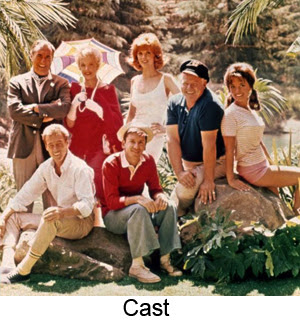
Gilligan's Island was created and produced by Sherwood Schwartz.  The show aired for three seasons on the CBS network from September 26, 1964, to April 17, 1967. The series followed the comic adventures of seven castaways as they attempted to survive on an island on which they had been shipwrecked. Most episodes revolved around the dissimilar castaways' conflicts and their unsuccessful attempts, (for whose failure Gilligan was frequently responsible), to escape their plight.

          Gilligan's Island ran for 98 episodes. Thirty-six episodes of the first season were filmed in black and white and were later colorized for syndication. The show grew in popularity during syndication, especially in the 1970s and 1980s when many markets ran the show in the late afternoon.


          Jerry Van Dyke was originally offered the role of Gilligan, but he turned it down, believing that the show would never be successful. (He chose instead to play the lead in My Mother the Car, which premiered the following year and was canceled after one season). The producers thought that Bob Denver, the actor who had played Maynard G. Krebs, the goofy but lovable beatnik in The Many Loves of Dobie Gillis turned out to be a perfect choice.


An added note:

The music and lyrics for the theme song, The Ballad of Gilligan’s Isle, were written by Sherwood Schwartz and George Wyle. One version was used for the first season and another for the second and third seasons.  With the growing popularity of characters Professor and Maryanne, their names were inserted into the lyrics in the second season. The theme song underwent this one major change because star Bob Denver asked studio executives to add their names to the song. The studio at first refused. Then Denver insisted that his name be taken out of the song if they didn't include the others. The studio caved in, and "the Professor and Mary Ann" were added.

Tuesday, October 19, 2021

Vintage 1960 Scandals The Curse of the Misfit Film


The Curse of the Misfit Film

 The Misfits, is a movie considered to carry a dark curse on anyone who was associated with it. While it failed at the box office at the time, Rotten Tomatoes has since given the movie a 100 percent rating.

          The film starred plenty of big names such as Clark Gable, Marilyn Monroe. and Montgomery Clift. But soon after the movie began production, the lives of people involved were thrown into discord.


          Monroe overdosed on the set after her relationship with Arthur Miller ended. A year after the movie wrapped up she died of an apparent overdose.


          Gable died of a heart attack only a few days after filming. On November 6, 1960, Gable was sent to the hospital where doctors found that he had suffered a heart attack. The following day his condition was listed as satisfactory. By the morning of November 16, he seemed to be improving, but he died that evening at the age of 59 from an arterial blood clot.

          Clift was involved in an accident that destroyed his career.  It all came crashing down when Clift was involved in a car accident after falling asleep behind the wheel. He lived the remainder of his life in constant physical and mental pain and became addicted to alcohol and painkillers.


          Five years after the movie finished filming, Clift was informed by a friend that the movie was airing on television, which he refused to watch. It was that night that Clift was found dead due to a heart attack.


Saturday, October 9, 2021

Vintage 1960s Music Itsy Bitsy Teenie Weenie Yellow Polkadot Bikini


Itsy Bitsy Teenie Weenie Yellow Polkadot Bikini

The Itsy Bitsy Teenie Weenie Yellow Polkadot Bikini is a novelty song telling the story of a shy girl wearing a revealing polka dot bikini at the beach. It was written byPaul Bance and Lee Pockriss and first released in June 1960 by Brian Hyland. The Hyland version reached number one on  Hot 100, selling a million copies in the US, and was a worldwide hit. The song has been adapted into French as "Itsy bitsy petit bikini" and into German as "Itsy Bitsy Teenie Weenie Honolulu-Strand-Bikini", reaching number one on national charts in both languages. Several versions of the song have proved successful in various European countries.


          Trudy Packer recited the phrases "...two, three, four / Tell the people what she wore", heard at the end of each verse before the chorus; and "Stick around, we'll tell you more", heard after the first chorus and before the start of the second verse. The song also made the top 10 in other countries, including #8 on the UK Singles Chart. It also reached #1 in New Zealand.


Added note:

          At a time when bikini bathing suits were still seen as too risqué to be mainstream, the song prompted a sudden take-off in bikini sales and is credited as being one of the earliest contributors to the acceptance of the bikini in society. The early 1960s saw a slew of surf movies and other film and television productions that rapidly built on the song's momentum.


For a walk down memory lane, here is the link to the Dave Clark version of the song. Enjoy!

 https://www.youtube.com/watch?v=ge9Ou3-YyqU